Wednesday, 20 May 2020

Facing migrant flood, UP, Bihar say need help to connect to districts


Written by Avishek G Dastidar
| New Delhi |

Updated: May 21, 2020 7:50:58 am


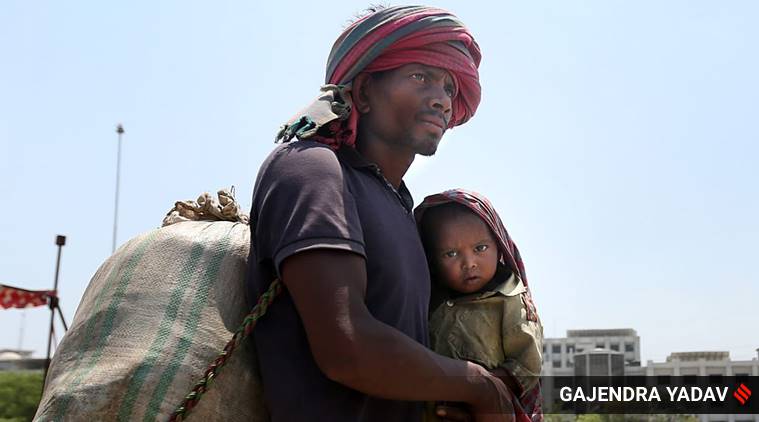
Bihar migrant labourers, India lockdown, migrant labourers, Up migrants rush, sharmik special trains, India coronavirus, India news, Indian Express Mangal Singh, 32, on his way to Bihar with his 15-month-old son in Ghaziabad on Wednesday.

The Centre may have done away with the need for destination states’ consent to ramp up services of Shramik Special trains, but states such as Bihar and Uttar Pradesh, which are major destination states for migrants, are grappling with logistics issues in handling the rush.

While Bihar has flagged capacity constraints to the Centre, Uttar Pradesh has sought local trains for movement within the state.

In a letter to Union Home Secretary Ajay Bhalla, Bihar Chief Secretary Deepak Kumar has said that to receive additional trains, the state requires those trains to carry passengers directly to the home districts of migrant passengers and halt at the stations in those districts.

“If this is not followed and trains bring passengers from different districts, then it will create huge difficulty for the administration,” Kumar said in his letter.

Read | Bihar says 20 lakh to return, Centre plans Shramik train surge

Uttar Pradesh, which has received — and is expected to receive — the most number of Shramik Special trains, has written to the Railways requesting Mainline Electric Multiple Units (MEMU) trains (like locals) on nine main routes in the state to replace buses to ferry migrant workers to various districts.
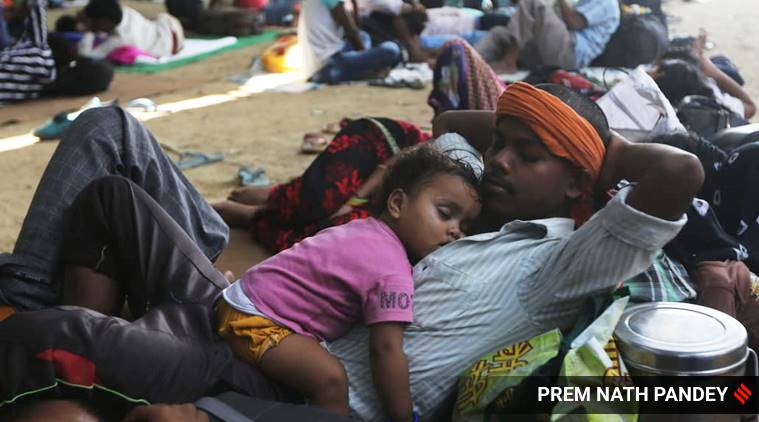
India lockdown, migrant labourers, migant labourers India lockdown, sharmik special trains, shramik trains, India news, Indian Express Stranded in cities due to the coronavirus-induced lockdown, migrant workers have sought to go home (Express Photo by Prem Nath Pandey)

Most of the Shramik Specials in Bihar are bringing passengers to central points like Danapur near Patna, from where 30 buses take passengers of each train to their districts.

Read| Day before revoking states’ consent, MHA asked states to requisition more trains for migrants

“We are handling around 50 trains per day, which means around a lakh passengers in a day. We have been receiving these trains as per our capacity. Consent is not a problem and everyone stranded should come home. We have told the Centre that if you want to give us more trains then send the trains as per our requirement, or else we will have difficulty in increasing the number of trains,” Kumar told The Indian Express.

Without striking a discordant note to the Centre’s policy, the letter says the state can receive more trains if they are sent as proposed.

“If the passengers are sent appropriately as discussed above, it will put less burden on us in transporting those migrant workers and in that case we can even receive trains every two hours, that is six trains per day in each route, which implies per day an additional 54 trains,” the letter said.

Read| Migrants back in Bihar show high positivity: 1 in 4 tested from Delhi 

Bihar so far has received 367 Shramik Specials and consent has already been given for 575 additional trains from Gujarat, Maharashtra, Punjab, Delhi and Uttar Pradesh.

“In buses there may be chances of accidents; the bus driver may be tired, and we have taken all the buses available, school buses and all, for the existing trains,” Kumar said.

Bihar has asked for 54 additional trains daily but in nine district-wise routes. The nine routes have three halts, each in a district, carrying passengers from four far-flung districts. For instance, one route covers Katihar-Purnea-Araria and it has suggested that only passengers from these three districts and from Kishanganj be in the trains on this route.

Read| Ten trains, every day: Pune administration’s plan to send home lakhs stranded here

Uttar Pradesh Additional Chief Secretary Awanish Kumar Awasthi wrote to Railways earlier this week seeking MEMU trains for transporting migrants on nine routes. It has so far received around 900 of the 1,800 Shramik Specials that began operation since May 1.  Railway officials told The Indian Express that the proposed regular services can completely eliminate the need for buses and other options involving roadways. Twenty-five migrants were killed in a road accident in Auriya in Uttar Pradesh last week.

The routes suggested connect places like Ghaziabad, Barabanki, Tundla, Kanpur, Varanasi, Shjahanpur etc. “We have started a service from Lucknow to Shaharanpur and a few other places, and have inspected the feasibility of other routes,” said Lucknow Divisional Railway Manager SK Tripathi.

📣 The Indian Express is now on Telegram. Click here to join our channel (@indianexpress) and stay updated with the latest headlines

For all the latest India News, download Indian Express App.

© The Indian Express (P) Ltd


Source link

Lockdown lessons: When room moves to home, class comes into the classroom


Written by Uma Vishnu
| New Delhi |

Updated: May 21, 2020 9:50:23 am


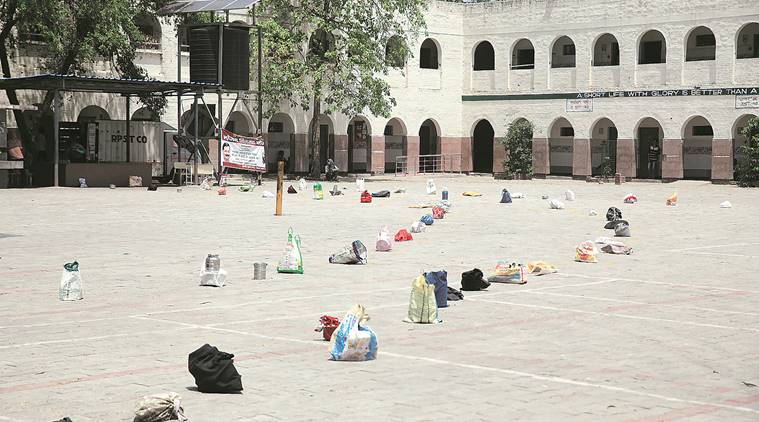
coronavirus, coronavirus India lockdown, India lockdown coronavirus, COVID-19, COVID-19 india lockdown, India news, Indian Express Schools have been locked down, and are being used for other purposes by government authorities. (Express Archive)

* A 14-year-old Class X student in Delhi spends close to four hours each day attending virtual classes and uploading assignments. Then, online guitar classes, weekly chats with family, streaming movies and music — her MacBook is powered all day.

* Across the city, in another virtual classroom, while most windows display children against designer décor and stuffed toys, in one, the child sits in the common landing area of his building, people walking past him.

* Two states away, the principal of a school in Nagaur, Rajasthan, which topped national rankings in math and reading outcomes in 2017-18, says less than 30 per of her students access the material she shares with parents on WhatsApp every day.

In this tale of three snapshots, is a telling story of how the Covid-19 pandemic lockdown is playing out in schools, private to public, metros to Tier II cities and far-flung rural districts.

The Indian Express sat through several virtual sessions to find that the classroom is being reshaped, not just by technology, but also by who the children are, the state of infrastructure in their school and, more importantly, at home.

Access becomes key given that less than half the households (42%) in urban India have Internet facility, according to the National Sample Survey Office’s Education in India report for 2017-18. In rural areas, this number falls to less than 15%. Which further drops to a paltry 10.7% for households (both rural and urban) with a computer, laptop or other computing devices.

It’s this digital divide that has added another layer to this social inequity, one that always existed, but has only deepened in these times.

Yet, students and schools have responded to this in different ways.

Take a Zoom session for primary children of a Noida school, which has reserved 25 per cent seats for Economically Weaker Sections under the RTE Act and has a sensitive social integration programme. But virtual classes mean that the inequities, relatively flattened in the classroom – where they shared the same food and the desk — become more conspicuous online.

The screen, divided into multiple windows, had most children against fancy backgrounds — plush sofas, kiddie sticker walls, curtains and expensive stuffed toys. But in one of the windows was a Chhota Bheem bag, hanging from a hook on a peeling pink wall behind the child. In the background, the pressure cooker goes off, then the mixie, until the teacher mutes all participants.

But in another Central Delhi school that has had a long and successful EWS programme, these inequities are less jarring.

After her Geography class on Zoom, during which a 17-year-old raised a virtual hand to almost every question her teacher asked, the Class 12 student says she misses “the feel of my school desk”, but is glad that she has a way to stay in touch with teachers and friends.

Daughter of a taxi driver, she was admitted under the EWS quota and now, in her final year in school, is a proud recipient of four honour badges.

She uses her father’s Samsung phone for her classes. “Luckily, papa applied for a broadband connection last year, when I had a lot of projects to submit,” she says.

Speaking on phone from the terrace of their home, “since the signal at home is never strong”, her father says that with the lockdown on, his taxi has been idle since March 22. “We have been living off our savings. Baithe baithe kha rahen hain. Kya karen. My daughter will be in college soon, there are expenses…”

A few kilometers and a world apart is a 14-year-old Class 10 student of an upscale Noida school.

“With online classes, I am on top of my assignments. And I like electronic devices, so that makes this a more interesting way of learning,” she says, adding, “Of course, my mother helps me organise my work, and I keep turning to her for help every time the connection goes off – and that happens quite often.”

It’s this parental support that has determined the effectiveness of such online programmes. But many parents – especially those of smaller children and those juggling work at offices and homes – are struggling.

An illustrative case is of the parents of an 8-year-old special needs child who say they have had it especially tough.

“My husband and I are public health specialists. I work at a medical college and I have to go to work every alternate day. While our son only has two-three sessions a day, for 40 min each, even that becomes extremely agonising. One of us has to be constantly with him, so I work my schedule in such a way that my husband sits with him when he has lighter subjects like music and arts, and for maths and languages, I ensure I am home. But I am dreading what will happen after the vacations. What will happen once our workplaces open up fully?” says the mother.

For teachers, too, many of whom have rarely experimented beyond chalk-and-board classroom sessions, the shift to online hasn’t been easy.

Rekha Roy, 50, who teaches mathematics at Carmel Convent School in Chanakyapuri, says that “for a generation that’s not very tech savvy, this came out the blue”.

These days, Roy writes her math sums on paper and uploads them on her computer, before sharing it with the class. “There are others who use stylus pens and all that, but I don’t. Luckily, my son and husband are home, so they help with technical glitches. But I hope this doesn’t go on for too long. It’s almost depressing. I miss going around the class and helping kids with their sums,” she says.

This is a luxury for many, argues Rafiq Siddiqui who understands these times and these insecurities like few others. Siddiqui, who founded Holy Mother English School in Malvani, the very slums he grew up in Mumbai, bristles at the mention of online education.

“I get calls every other day from ed tech companies offering some package or the other. I am not even sure if my children who live in these slums are eating alright. Their parents are probably out of work. I try and arrange for food and when I call them to distribute those packets, their phones are usually switched off because they have no money to recharge. Can’t we handle the pandemic first? Can’t online education wait?,” he says.

Not quite, suggests the principal of a government school in Delhi, a state where the government’s education reforms are among its biggest success stories.

Admitting there are limits of access and many families are struggling to cope with the lockdown, technology is also an empowering tool. “We have started live online classes for 9, 10 and 12. And for classes 7 and 8, we send them activities on WhatsApp and SMS,” he says.

He admits that only 30-40 per cent students attend these classes. But he is not discouraged. Low attendance in government schools is an issue even in the best of times, he says. “These are summer holidays and at least there is some learning happening, at least more than what usually happens during vacations.”

(Tomorrow: Delhi to Nagaur: stepping, sometimes fumbling, over the divide)

📣 The Indian Express is now on Telegram. Click here to join our channel (@indianexpress) and stay updated with the latest headlines

For all the latest India News, download Indian Express App.

© The Indian Express (P) Ltd


Source link

Coronavirus India News Live Updates: Covid-19 Tracker, Total Corona Cases in India, Covid-19 Vaccine Today Latest News Update


coronavirus, coronavirus latest news, india news, coronavirus news, covid 19 vaccine news, covid 19 india, coronavirus live news, corona news, corona latest news, india coronavirus, coronavirus live news, coronavirus latest news in india, coronavirus live update, covid 19 tracker, india covid 19 tracker, covid 19 tracker live, corona cases in india, corona cases in india The Ministry of Civil Aviation will share standard operating procedures with all airports and airlines. (File Photo)
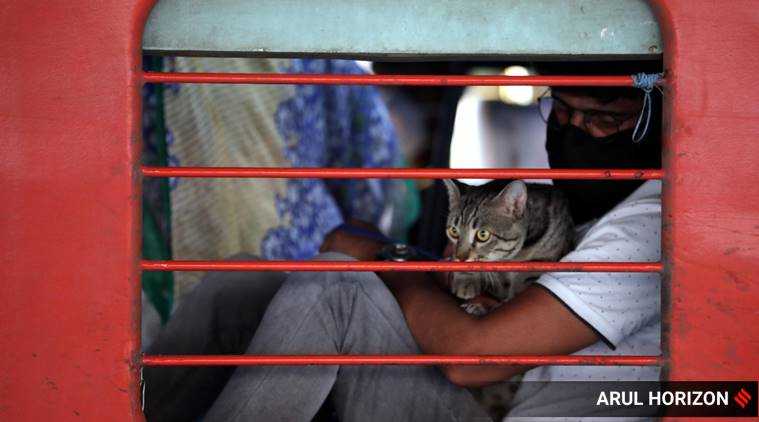
Coronavirus India LIVE Updates:

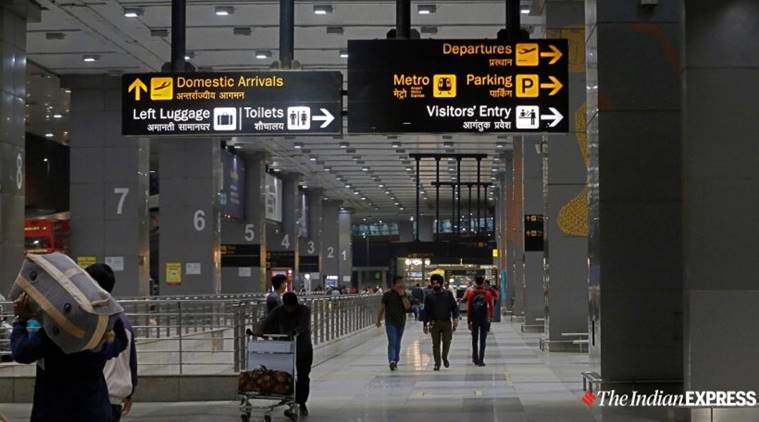
Domestic passenger flight operations are expected to commence from Monday, May 25 in a calibrated manner, Civil Aviation Minister Hardeep Puri said in a tweet. To this extent, the Ministry of Civil Aviation will share standard operating procedures with all airports and airlines.

To which destinations will flights operate?

While the earlier indications were that flights may start between airports situated in green zone areas, airlines had raised the issue of viability for operating such flights. Even as most major centres such as Delhi, Mumbai, Bengaluru, Ahmedabad, etc are still classified as red zone areas, a green light from certain state governments will ensure flights can be operated from these areas.

Will flying be any different?

A detailed set of standard operating procedures is being worked on by the government in consultation with the aviation industry and going by the initial feedback, a number of new rules and regulations are expected to be put into place that will change the flying experience.

These new guidelines include mandatory social distancing at airports, revisions in the way security procedures are conducted to ensure minimal contact, use of face masks and personal protective equipment by passengers and employees, among others. A variety of new health checks may also be instituted that could result in longer queues at airports and increased wait times.

coronavirus, coronavirus latest news, india news, coronavirus news, covid 19 vaccine news, covid 19 india, coronavirus live news, corona news, corona latest news, india coronavirus, coronavirus live news, coronavirus latest news in india, coronavirus live update, covid 19 tracker, india covid 19 tracker, covid 19 tracker live, corona cases in india, corona cases in india Students, IT proffesionals and labourers at the first special train to Kashmir that left from Pune amid lockdown 4.0

Seventeen Jan Shatabdis, five Durontos and a number of traditionally popular mail or express trains to various parts of India are among the list of 100 trains to be reintroduced from June 1 in the second phase of graded resumption of passenger train operations in India.

Sources said the decision has been taken with the twin objective of opening up the options for willing migrants to come back to the states of work from their home states in the interest of resumption of economic activity, along with giving the stranded and others willing to travel the option.


Source link

India builds road north of Ladakh lake, China warns of ‘necessary counter-measures’


Written by Sushant Singh
| New Delhi |

Updated: May 21, 2020 8:06:04 am


While there have been tensions about the limits of patrolling by the two sides on the northern banks of Pangong Tso, sources said the Chinese “forcefully insisted a couple of days back that the Indian patrols stop at Finger 2”. (Express archive photo)
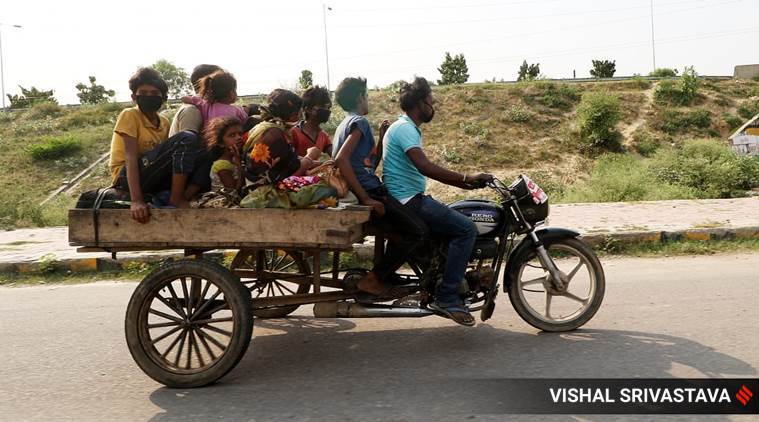
TWO ROUNDS of talks between Indian and Chinese local military commanders at Pangong Tso, where troops of the two sides came to blows two weeks ago, remained inconclusive Tuesday and Beijing warned of “necessary counter-measures”. It claimed the Indian Army had “entered Chinese soil on the Baijing and Lujin duan section of the Sino-Indian border, obstructing the normal patrol of Chinese border troops, and was “attempting to unilaterally change the status quo of border territory”.

While the Army and Ministry of External Affairs maintained silence, officials in New Delhi described the situation as “delicately poised” and “very sensitive” at a time when the country is grappling with the Covid-19 pandemic and its fallout.

The Indian Express has learnt that there has been movement of troops to eastern Ladakh following the continuing objections of the Chinese to the construction of a road in the Galwan river area, well within Indian territory.

The site of the current construction is near the confluence of Shyok and Galwan rivers, some 200 km north of the Pangong Tso lake.

The Chinese, sources said, have objected to construction of a new road which branches off the Darbuk-Shyok-Daulat Beg Oldie (DSDBO) road along the riverbank towards the LAC.

The Chinese have moved troops to the area, pitched 70-80 tents and parked heavy vehicles and monitoring equipment, not very far from the Indian side. This falls in SSN or sub-sector north under the Army, while areas south to it are in the Hot Springs sector under the ITBP.

“Galwan is not a disputed area between India and China, unlike Pangong Tso. Both sides agree on the LAC and patrol accordingly. There was no transgression by Chinese patrols in the area in the past two years. The issue is the construction of the road, which is well inside our territory, and, therefore, their objection is hard to comprehend,” a source said.

India has relocated additional troops to the area, but they have not been deployed so far at the location.

The DSDBO road connecting Daulat Beg Oldie, at the base of the Karakoram Pass, with Shyok and Darbuk, was completed a year ago and provides India greatly connectivity in the border areas. The 255-km road, which had to be realigned after the initial alignment was found unsuitable, runs along Shyok and Tangtse rivers.

At Pangong Tso, as reported by The Indian Express, the Chinese have deployed additional boats on the lake and stopped the movement of Indian soldiers beyond Finger 2 on the northern banks of the lake – the mountains there jut forward in major spurs, which the Army calls Fingers. India claims the LAC is co-terminus with Finger 8, while the Chinese claim that the LAC passes through Finger 2. The area between the two differing perceptions is the territory which both armies try to dominate through regular patrolling. The Indians physically control the area up to Finger 4.

On the talks between the two sides Tuesday, sources said, “The meeting between the commanders on both sides is part of the established procedure to resolve any misunderstanding. These take place on required basis at various levels, from a platoon commander to the brigade commander. The important thing is that the procedure is being followed,” sources said. They declined comment on the date or location of the next meeting.

In comments in Mandarin Tuesday, the Chinese Foreign Ministry warned of “necessary counter-measures” and said: “Chinese border troops are committed to upholding peace and tranquility in China-India border areas. At the same time, we will resolutely defend the sovereignty and security of our homeland.”

“The Chinese side has asked the Indian personnel to return immediately and restore the control of the relevant areas. Strictly restrict their frontline teams, build on the important consensus reached by the leaders of the two countries and the agreements that have been made between the two sides, meet each other face-to-face, and work together with the Chinese side to safeguard peace and stability in the region,” it said.

ALSO READ | Will reclaim at any cost: Nepal PM Oli on contested land

Meanwhile, US State Department official Alice Wells, responding to a question during a public webinar, said: “Chinese aggression is not always rhetorical. Whether it is the South China Sea or whether it is along the border with India, we continue to see provocations and disturbing behaviour by China that raises questions about how China seeks to use its growing power. And that is why we are seeing a rallying of like-minded nations. The border disputes are a reminder of the threat posed by China.”

📣 The Indian Express is now on Telegram. Click here to join our channel (@indianexpress) and stay updated with the latest headlines

For all the latest India News, download Indian Express App.

© The Indian Express (P) Ltd


Source link

Atmanirbhar Bharat: In 2 schemes worth Rs 30,000 crore, 40% funding to come from states


Written by Harikishan Sharma
| New Delhi |

Updated: May 21, 2020 7:34:38 am


Nirmala Sitharaman, Atmanirbhar Bharat Abhiyan, Atmanirbhar Bharat Abhiyan features, PM Modi, Covid 19 stimulus package, Rs 20 lakh crore package, Lockdown 4, express explained, indian express, Covid 19 news The PMMSY, which is aimed at bringing about a Blue Revolution through “sustainable and responsible development of fisheries sector in India”, has a total estimated investment of Rs 20,050 crore. (File photo)
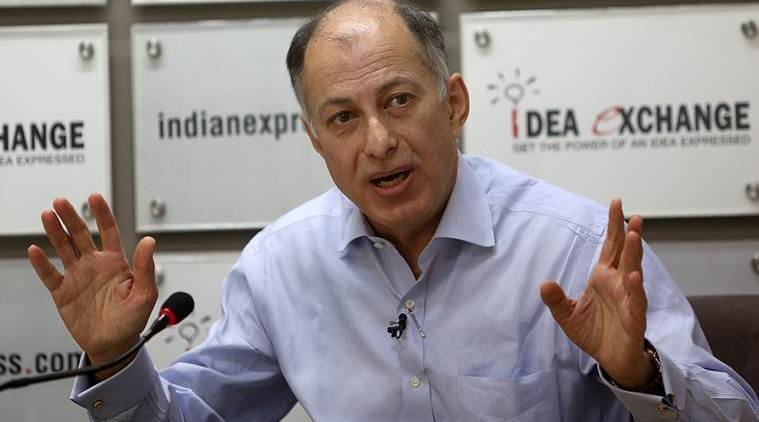
About Rs 30,000 crore worth of schemes announced in the Atmanirbhar Bharat package will rely on 40 per cent share from states.

These schemes — Pradhan Mantri Matsya Sampada Yojana (PMMSY) and Scheme for Formalisation of Micro Food Processing Enterprises (FME) — were approved by the Union Cabinet on Wednesday.

The PMMSY, which is aimed at bringing about a Blue Revolution through “sustainable and responsible development of fisheries sector in India”, has a total estimated investment of Rs 20,050 crore. Out of this, Rs 9,407 crore will come as central share, Rs 4,880 crore as states’ share and Rs 5,763 crore as beneficiaries’ share.

The PMMSY has two components — Central Sector Scheme (CS) and Centrally Sponsored Scheme (CSS). The statement shows that under the CS component, the funding pattern for the Northeastern and Himalayan states will be 90% central share and 10% state share; for other states it will be 60% central share and 40% state share; and for Union territories (with and without legislature) it will be 100% central share.

However, under CSS component of PMMSY, “the entire project/unit cost will be borne by the Central government (i.e. 100% central funding)”.

“Wherever direct beneficiary oriented i.e. individual/group activities are undertaken by the entities of central government including National Fisheries Development Board (NFDB), the central assistance will be up to 40% of the unit/project cost for General category and 60% for SC/ST/Women category,” it said.

“The Scheme will be implemented during a period of 5 years from FY 2020-21 to FY 2024-25,” it added. It will help in “doubling of fishers, fish farmers and fish workers incomes by 2024”.

The PMMSY was announced in the third tranche of the Rs 20.97 lakh crore Atmanirbhar Bharat package by Finance Minister Nirmala Sitharaman last week. However, PMMSY first figured during the 2019-20 Budget, presented on July 5 last year. In her speech at that time, Sitharaman had said, “Through (the) scheme, the Department of Fisheries will establish a robust fisheries management framework. This will address critical gaps in the value chain, including infrastructure, modernisation, traceability, production, productivity, post-harvest management and quality control.”

Another scheme announced in the Atmanirbhar Bharat package — Scheme for Formalisation of Micro Food Processing Enterprises (FME)—was also approved by the Cabinet. The FME will have an outlay of Rs 10,000 crore and funding pattern of 60:40. This means that the Centre will share 60 per cent of the expenditure and the balance 40 per cent will be borne by states.

FME is a new scheme, and will be implemented over a five-year period from 2020-21 to 2024-25.

📣 The Indian Express is now on Telegram. Click here to join our channel (@indianexpress) and stay updated with the latest headlines

For all the latest India News, download Indian Express App.


Source link

‘Don’t know why lockdown was announced with four hours notice’: Naushad Forbes


By: ENS Economic Bureau | New Delhi |

Updated: May 21, 2020 7:37:24 am


Naushad Forbes, E-Xplained, Naushad Forbes E-xplained, Naushad Forbes Indian Express, India news, Indian Express Naushad Forbes, co-chairman of Forbes Marshall and former president of Confederation of Indian Industry (CII)

Millions of migrants who had to rush home because of the lockdown could have been helped if the government had accepted a proposal to guarantee loans to companies by banks to fund wages during the lockdown said Naushad Forbes, co-chairman of Forbes Marshall and former president of Confederation of Indian Industry (CII) at an Indian Express E-XPLAINED webinar Wednesday.

Forbes also said that the lockdown could have been organised better if there had been transparent discussion about its planning and if more preparations had been made to allow movement of people.

“I do not know why the first lockdown needed to be announced with four hours notice. That’s what caused a lot of the immediate crisis for many migrant workers because there was a certain mass of people who were trying to try to get on trains and so on to go home,” he said. Forbes also said that the package announced by the government so far has fallen short of the “fundamental need for direct benefit transfers to the most vulnerable in society.”

“They need reassurance that they will be taken care of. The best way they get that reassurance is through a direct benefit transfer that could transfer money into their Jan Dhan accounts on a periodic basis,” said Forbes, noting that it had happened in bits and pieces and that it would have been better if direct benefit transfers are given rather than separate packages providing free food for migrant workers and separate packages for farmers.

Forbes also said that millions of migrant workers who had to travel back could have been helped if the government had accepted a CII proposal that enterprises be given loans at 4-5 per cent interest, guaranteed by the government to allow firms to pay three months’ wages. The Centre has announced a package guaranteeing collateral free loans of Rs 3 lakh crore to MSMEs.

Forbes said that many firms had paid salaries in March and April, but when there was “no end in sight” for the lockdown, companies that employed many people were not going to be able to go further. He added that it was not appropriate to force companies by law to pay people who are not working.

Forbes said there was a need to address labour contracts in the country. “… If you’re formally employed, you have complete protection and almost no flexibility (for employers), and that covers maybe 10-15 per cent of the total workforce. And if you’re in the 85 per cent that’s informally employed, you have almost complete flexibility (for employers) and all and pretty well no protection.”

He said that decisions by states such as Uttar Pradesh and Madhya Pradesh to simply suspend some labour laws was “knee-jerk”, adding that such moves may create attractive conditions for bad jobs which is not the intention of the state governments.

The UP government had earlier this month exempted business from the purview of almost all labour laws for a period of three years, while the MP government has relaxed labour laws allowing extended shifts of up to 12 hours and allowing business to hire and fire workers at their convenience for a period of 1000 days.

Forbes said that state governments needed to work on providing labour regulations with a balance of protection for workers and flexibility for employers. “Let states get that balance. Let states compete, on tweaking the balance of protection flexibility. I think we can,” he said, noting that when they compete, states should not compete in a race to the bottom with no laws.

📣 The Indian Express is now on Telegram. Click here to join our channel (@indianexpress) and stay updated with the latest headlines

For all the latest India News, download Indian Express App.

© The Indian Express (P) Ltd


Source link

Requirement in Central Forensic Science Laboratory (CFSL) Jan-2019 « Government Jobs India – 2020 Sarkari Naukari Vacancies


Requirement in Central Forensic Science Laboratory (CFSL) Jan-2019


Central Forensic Science Laboratory (CFSL)
Directorate of Forensic Science Services, Ministry of Home Affairs, Govt. of India

Invites applications from suitable candidates for recruitment of Upper Division Clerk (UDC) and Laboratory Attendant on deputation basis.

  1. Upper Division Clerk (UDC) – 1 Post
  2. Laboratory Attendant – 1 Post

How to Apply: The applications in the prescribed proforma, in respect of suitable, eligible and willing officers, who can be relieved immediately, if selected, may please be sent to the Director, Central Forensic Science Laboratory, Directorate of Forensic Science Service, Ministry of Home Affairs, Govt. of India, 38/4, Krishna Complex, Kharadi Bypass, Kharadi, Pune – 411 014 along with up-to-date ACRs/ APARs of last five years and photocopies of certificates duly attested by an officer not below the rank of Under Secretary of Govt. of India within a period of 02 months from the date of publication of this advertisement in the Employment News (i.e. Last date will be 05/03/2019).

Logon to: CFSL-Advertisements.pdf for more detailed information.


Source link

Bihar Polytechnic Lecturer Recruitment Online Form 2020 How to apply Online Form for Teaching Jobs

Name Of The Sarkari Job : Bihar Polytechnic Lecturer Recruitment Online Form 2020 Sarkari Latest Job  Informtion: Bihar Public Service ...