The Council of Higher Secondary Education, Manipur on Tuesday released the schedule for the remaining papers of Class 12 board exams. The council will be conducting the class 12 board exams on July 6 and 7, 2020, at various centres spread across the state.
According to the schedule, the council informed all concerned officers “to make necessary preparation for the smooth and fair conduct” of the examinations.
By: Sports Desk | Updated: May 21, 2020 8:11:09 pm
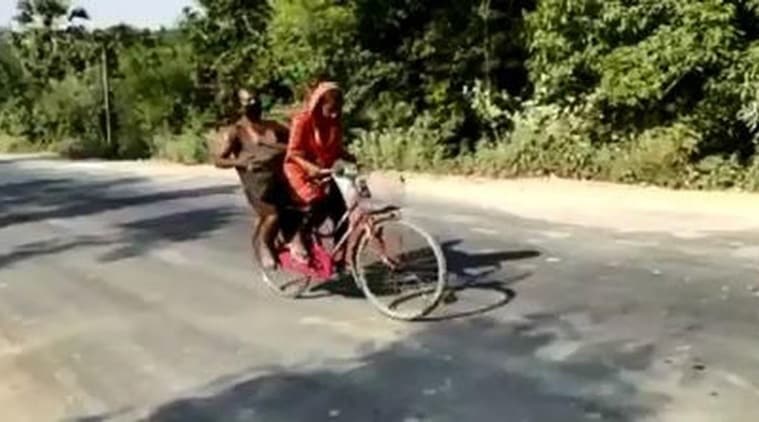
Jyoti cycled from Gurugram to Bihar’s Darbhanga district – their native place – with her father riding pillion over eight days. (Screenshot)
Jyoti Kumari, the 15-year-old girl whose story went viral on social media last week after it emerged that she had cycled 1200 km from Gurugram to Bihar over eight days with her ailing father in tow, has been offered a trial by the Cycling Federation of India.
Fearing that they would soon be turned out by their landlord from their Gurugram lodgings, a tenacious Jyoti had asked her injured father to sit on the rear side carrier of her cycle as she pedalled home. “Amid the gloomy situation, Jyoti suggested that we return home. I pointed out that we would not be able to find any trains or buses and my condition would not allow me to walk. She said we should get a bicycle,” her father had said.
Cycling Federation of India Chairman Onkar Singh told PTI on Thursday that if Kumari, a class eight student, passes the trial, she will be selected as a trainee at the state-of-the-art National Cycling Academy at the IGI Stadium complex in New Delhi.
“We spoke to the girl this morning and we have told her that she will be called to Delhi next month as soon as the lockdown is lifted. All the expenses of her travel, lodging and other will be borne by us,” Singh said.
लॉकडाउन था, सो अपने पिता को साइकिल पर बैठाकर गुरुग्राम से दरभंगा ले गई बेटी… वीडियो: मोहन भारद्वाज और सीटू तिवारी pic.twitter.com/Mc7hkmyB4O
“If she needs to accompany somebody from home, we will also allow that. We will see in consultation with our Bihar state unit on how she can be brought to Delhi for a trial,” he added.
Asked about the rationale behind offering trial to the youngster, Singh said, “She must have something in her. I think cycling down more than 1200 km is not a mean job. She must be having the strength and physical endurance. We want to test it.”
“We will make her sit on the computerised cycle we have at the academy and see if she satisfies the seven or eight parameters to get selected. After that she can be among the trainees and she will not have to spend anything.”
He said the CFI always tries to find out talent for grooming.
Students will soon be able to pursue two degree courses simultaneously in same or different streams, with the University Grants Commission (UGC) giving its nod to a proposal in this regard, according to officials.
However, one of the two degrees will have to be pursued through regular mode and the other has to be through online distance learning (ODL). “The proposal was approved in the recent commission meeting for simultaneous dual degrees for students in India, allowing students to complete courses in the same or different streams at the same time. One of the two degrees, however, has to be through regular mode and the other has to be through online distance learning,” UGC Secretary Rajnish Jain said.
He said that “an official notification will be issued soon in this regard”. The UGC had last year set up a panel headed by its Vice Chairman, Bhushan Patwardhan, to examine the issue of pursuing two degree programmes simultaneously from the same university or different universities either through distance mode, online mode or part-time mode.
However, this is not the first time the commission was examining the issue. The UGC had set up a committee in 2012 as well and consultations were held on the same but ultimately the idea was junked.
The 2012 committee headed by then Vice Chancellor of the Hyderabad University, Furqan Qamar, had recommended that a student enrolled in a degree programme under regular mode may be allowed to pursue a maximum of one additional degree programme simultaneously under open or distance mode from the same or a different university.
“However, two degree programmes under regular mode may not be allowed simultaneously as it may create logistic, administrative and academic problems. A student pursuing a degree programme under regular mode may be allowed to pursue a maximum of one certificate, diploma, advanced diploma, PG diploma programme simultaneously either in regular or open and distance mode in the same university or from other institutions,” the panel report had then said.
According to UGC officials, “the commission had then sought comments of the statutory councils on the committee’s report and the responses received did not endorse the idea of allowing students to pursue multiple degree programmes simultaneously. Hence the plan did not take off”.
Written by Shambhavi Dutta | New Delhi | Published: May 21, 2020 7:10:48 pm
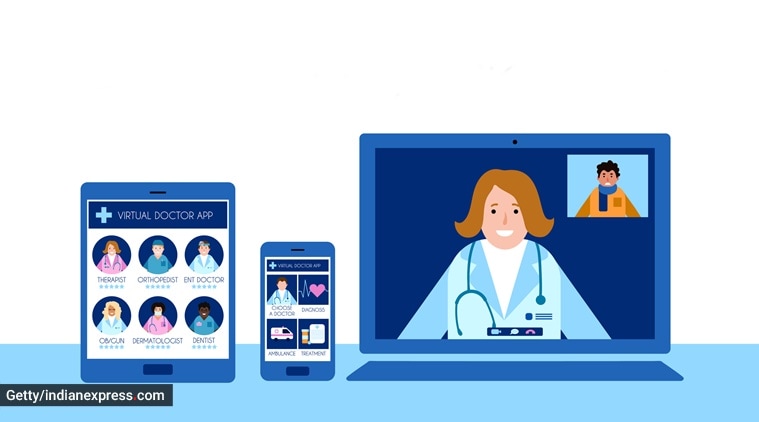
With Covid-19 becoming more unpredictable than ever, healthcare systems across the world, including that of India, are strained. (Photo: Getty)
The medical industry, for the most part, functions on physical interaction, with a doctor checking the pulse, using a stethoscope, feeling for lumps or peering into the mouth for possible telltale signs. However, such practices are largely suspended as of now given the coronaviruspandemic.
With Covid-19 becoming more unpredictable than ever, healthcare systems across the world, including that of India, are strained. As per the National Health Profile- 2019 data, there are 7,13,986 government hospitals’ beds in total, which accounts for 0.55 beds per 1,000 population. Besides, a number of hospitals have been sealed due to workers testing positive. On April 6, Mumbai’s Wockhardt hospital, for example, was sealed when the count of health workers and doctors testing positive for Covid-19 rose to 54.
Amid this scenario, telemedicine is emerging as a feasible option. Anil Vinayak, GCOO of Fortis Healthcare, told the theindianexpress.com, “The use of telemedicine technology allows healthcare to become more accessible, efficient, and convenient for the patient.”
The concept of virtual healthcare has been around before the world was struck by the pandemic. Back in 2015, the government had launched the Social Endeavour for Health and Telemedicine (SEHAT), a pan-India health initiative to connect 60,000 health structures throughout the country and provide the service irrespective of the geographical location.
In the current situation, however, the idea of healthcare going digital seems more attractive than ever. Online consultations can prove to be a major relief for healthcare workers. The results are being seen globally too.
In an article in The Economist, it was stated that “America’s medicare programme, which covers more than 60 million elderly people, has said it would allow online patient visits. Also, federal rules were eased to allow American doctors to work across state lines, which is seen as a boon to remote consultations.”
For India, it has been seen that “there has been significant week-on-week growth since online services were enabled after the guidelines by the government were published as part of the COVID response. “At a pan-Fortis level, tele/video consultation accounts for 10 per cent of our pre-COVID OPD consultation volumes,” said Vinayak.
Scope of virtual healthcare wide but caution is key
However, Dr Kaberi Banerjee, Medical Director, Advanced Fertility and Gynaecology Centre, New Delhi says “even when the scope of virtual healthcare is wide, its selection has to be wisely done.”
“Any consultation where a decision cannot be taken without physical examination of the patient cannot be done through virtual healthcare,” said Dr Banerjee. Ishan Singh, a writer, who recently opted for a video consultation, told theindianexpress.com, “I found the entire experience somewhat disorganised and the advice conflicting. I had a severe injury and did two different consultations. This happened because the doctor was not able to examine the injury properly.”
Digital healthcare – Awareness, Access, Affordability
Virtual healthcare can easily help in providing primary care like follow-ups, getting a second point of view and screening patients to see if they need an in-person consultation. (Photo: Getty)
Telemedicine has the power to fill in the gaps that have been exposed due to the current situation. Just like video-conferencing solutions did not mean people stopped travelling to work, but it made for a smarter option when required. “It has the potential to solve three major issues that healthcare in India faces – awareness, access, affordability,” remarked Akshat Seth, Chief Operating Officer, CK Birla Hospital, Gurgaon.
For starters, virtual healthcare can easily help in providing primary care like follow-ups, getting a second point of view and, most importantly, screening patients to see if they need an in-person consultation. ”It also increases operational efficiencies for doctors, reduces the load on hospitals and healthcare facilities, while providing assurance for patients with improved support and feedback,” said Seth.
In India, providing in-person healthcare is challenging given the large geographical distances and relatively limited resources. In fact, “doctor population ratio in India is still 1:1800. This is significantly lower than the 1:1000 recommended by the WHO. Nearly 60% of hospitals, 75% of dispensaries and 80% of doctors in India are located in urban areas servicing just about 28% of the population causing severe accessibility problems,” added Seth.
But with strides made in virtual healthcare and rapid advances in ICT, India has the potential to completely change the way healthcare is delivered in the country. “With over 687 million internet users and 629 million mobile users as of January 2020, India is the second-largest online market in the world,” said Seth.
The Aarogya Setu app is an example of a cost-effective digital infrastructure that has been made available widely. The app was launched in order to trace the transmission and saw at least 50 million downloads since its launch.
The issue is not technology but people. (Photo: Getty)
The call for action amid the pandemic is to practice social distancing as much as possible. “More video consultations mean less physical crowding in hospitals, leading to improved social distancing as well,” said Vinayak. However, there has to be a change in mindsets. The issue is not technology but people. “The myth that teleconsultation is not as good as face-to-face consultation has to be dispelled. A change in mindset is essential to make virtual consultations a success,” added Dr Banerjee.
While there can be inhibitions on the patient’s part, said Sharmishta Das, an IT professional (name changed) who recently consulted a doctor virtually said, “I was not comfortable with showing the dermatologist my skin issue over the video call because I honestly felt he wouldn’t be able to diagnose much behind the screen.”
“The best way to solve this is to induce trials, and the current Covid-19 situation is a catalyst to drive greater acceptance and adoption,” said Seth. On the other hand, the doctors feel that patients often have no consideration for their time when the consultation turns virtual.
Dr Banerjee said, “After the consultation is done, the patient feels free to call the doctor any time to clarify doubts. We must realise that this is not how it works.” She also agreed that these mindsets will not change overnight.
Seth, too, remarked, “The biggest challenge is not technology. It is people who need to accept, both doctors and patients, who have to get used to these newer ways of working.”
The APJ Abdul Kalam Technological University, Thiruvananthapuram on Wednesday released the timetable for the B Tech final semester exams on its official website.
According to the timetable, the university will conduct the B.Tech final semester regular and supplementary exams from July 1. The semester 8 honours exams will be held on June 29.
The duration of the exams has been reduced to two hours and fifteen minutes from the usual three hours.
Time Table:
According to the notification, in addition to the BTech final semester the S7 honors and MBA T5 exams which couldn’t be held on the scheduled date of March 16, will be conducted on June 26.
By: Sports Desk | Updated: May 21, 2020 6:25:20 pm
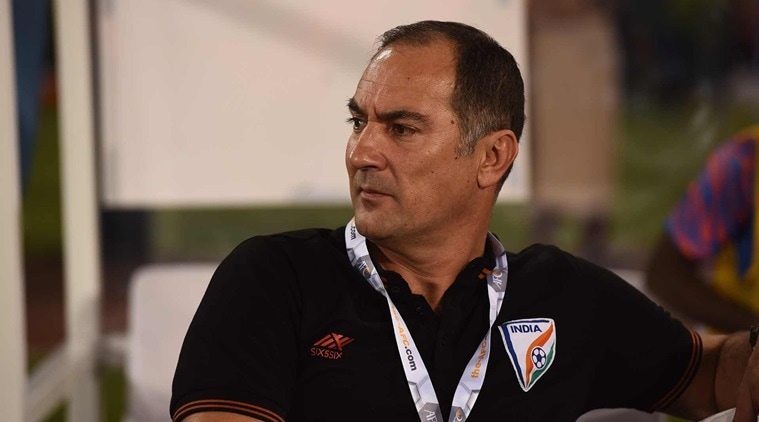
Igor Štimac was appointed as India’s head coach in last May. (Source: File Photo)
Although last year’s Indian Super League (ISL) saw an extension to its schedule, India’s national football team head coach Igor Štimac believes that the domestic league format could still do with expansion as it would help players in the long-run.
Even after a year since he took over the helm of Indian football, the Croatian tactician indicated that he still remains excited about the job where he managed to shift the focus “from a kick and chase football to a more possession-based football”.
But still, he believes that much more needs to be done to uplift India from a FIFA ranking of 108 — mainly, having a long-term calendar season incorporated with the Durand Cup and the Super Cup.
“We cannot stop our season at the end of February and football needs to be played until mid-May. I am told that it cannot happen as it overlaps with the broadcast of the Indian Premier League (IPL) but broadcast is not important. What is important is that players play more games to improve their football and bring more quality to the national team,” said Štimac in an interview with WION.
Apart from the longevity of the domestic leagues, the number of foreign players active in ISL and I-League is a matter of worry for the 52-year-old too.
“I am feeling depressed and tired at repeatedly saying we have to reduce the number of foreign players in Indian domestic football. If the government can change the citizenship regulations, then we can get 7-8 players of Indian origin who are playing abroad and that would change our results dramatically,” said the 1998 World Cup semi-finalist.
Although India has made progress under Štimac with their positional play and pressing routine, the results have been rather dispiriting, but the goalless draw against Qatar at Doha remains a high point in his reign.
Ever since March 24, football in India has been brought to a complete stop with the I-League season being called off later on. The national team’s FIFA World Cup 2022 home-leg qualifier against defending Qatar has been postponed too.
The Supreme Court Thursday sought Uttar Pradesh government’s reply on a batch of pleas challenging the Allahabad High Court verdict which upheld the state’s decision to keep higher cut-off marks for the appointment of 69,000 assistant basic teachers. The top court asked the state government to explain through a chart detailing the vacancies and the chronology of events in the process which was undertaken for the appointments. A bench of Justices U U Lalit, MM Shantanagoudar and Vineet Saran which initially declined to interfere with the high court verdict later modified its order and issued notice to the state government and posted the matter for further hearing on July 6.
It asked the Uttar Pradesh government to explain as to why it changed the earlier criteria of 45 per cent cut-off marks for the general category and 40 per cent for the reserved category. The bench sought a detailed reply before July 6.
The top court said the matter required detailed hearing as there were many parties to the litigation and it would be better if the pleas are adjourned till open court hearings resume. Several petitions, including those by individuals and Uttar Pradesh Prathmik Shiksha Mitra Association, have been filed challenging the May 6 decision of the Lucknow bench of Allahabad High Court.
At the outset, senior advocate Mukul Rohatgi, appearing for one Ram Sharan Mauraya, said that single bench order of the high court was in their favour but the division bench order went against them.
He said cut-off marks cannot be fixed after the exam is over as they have to be decided before the examinations are conducted and therefore the process was wrong.
Rohatgi said the issue also deals with nature of contract and changes made regularly in the appointment process. He said that after the examination on January 6, 2019, the cut-off was made 65 per cent for the general category and 60 per cent for the reserved category, from the earlier 45 per cent and 40 per cent respectively.
To this, the bench told Rohatgi that due to cut-off some of Shiksha Mitra’s examinees were not able to qualify but the point is some of them did not even have the required marks. The senior lawyer said that salary of Shiksha Mitra’s is very less and if the cut-off marks is fixed at 45 per cent for general category and 40 per cent for reserved category, then many more people will get the chance.
The bench said it would like to hear the matter at length as there are too many counsels appearing in the matter and it would not be possible through video conferencing. It then adjourned the matter for further hearing after the open court hearing resumes and refused to pass any interim order or status quo. Senior advocates Rajeev Dhavan, Dushyant Dave, CA Sundaram and other lawyers, appearing for another set of Shikhsa Mitras’, objected to the adjournment and said that court should hear it now as it is an important issue impacting lakhs of people. Dhavan said the exam results should be recalculated and re-computed on the basis of the earlier cut-offs.
The bench asked Solicitor General Tushar Mehta, appearing for the state, as to why were the rules and criteria changed after the examination was held.
Mehta said that he needs to take instruction on the issue but these people (Shikhsa Mitras’) want to ride on the back of meritorious candidates. The bench said that Mehta should file the reply before July 6. The high court’s final verdict of May 6 this year had paved the way for completing the process for appointment of 69,000 assistant basic teachers in Uttar Pradesh.
It had directed the state government to complete the process of appointment within the next three months.
The process is almost already complete on the strength of the interim directions of the division bench issued on May 29, last year and only result is to be declared finally.
The division bench has set aside the single bench order that had quashed the government order by which it had fixed the criteria of 65 per cent qualifying marks for general category candidates and 60 percent for reserved category candidates for appointment as basic teacher.
The single bench had said that the minimum cut-off marks would be 45 per cent for general and 40 per cent for reserved candidates.
On July 25, 2017, the top court had asked the state government to cancel the recruitment of 1,37, 517 teachers on the post of TET Assistant Teacher but give them the benefit of experience in two recruitment process.
Six months later, on January 17, 2018, the government had issued the order for the written examination for the assistant teachers’ posts for the first time to hire 69,000 teachers.


 Jyoti cycled from Gurugram to Bihar’s Darbhanga district – their native place – with her father riding pillion over eight days. (Screenshot)
 With Covid-19 becoming more unpredictable than ever, healthcare systems across the world, including that of India, are strained. (Photo: Getty)
 Virtual healthcare can easily help in providing primary care like follow-ups, getting a second point of view and screening patients to see if they need an in-person consultation. (Photo: Getty)
 The issue is not technology but people. (Photo: Getty)
 Igor Štimac was appointed as India’s head coach in last May. (Source: File Photo)