Thursday, 21 May 2020

A diplomatic opening | The Indian Express


By: Editorial |

Published: May 22, 2020 1:28:26 am


Coronavirus, coronavirus India lockdown, India lockdown coronavirus, COVID-19 India lockdown, Express Editorial, Indian Express There are concerns about how much the vaccine will cost, and whether pharma companies will put humanitarian concerns before profits.

The unanimous resolution approved by the World Health Assembly on Tuesday night, calling for an inquiry into the origin and spread of the coronavirus and the international community’s response to it, masks a more complex diplomatic story. That the US and China have agreed to the resolution after prolonged acrimony in recent weeks over the origin of coronavirus, is indeed a surprise. The US wanted members of the World Health Organisation to pin the blame on Beijing for keeping the world in the dark about the nature of the virus that broke out in the Chinese city of Wuhan at the turn of the year, letting it spread to other countries, and manipulating the WHO leadership into inaction. China, which vehemently denied these charges and proffered accusations of its own against the US, rejected the talk of any inquiry.

The real source of the consensus on the resolution is the enormous damage inflicted by the virus. It has already infected nearly 5 million people and killed nearly 3,50,000 around the world. To make matters worse, it has ground the global economy to a sudden halt and heaped unprecedented misery on the world’s population. No wonder most nations want to know where the virus came from, how it spread across the world, and the role that the WHO, as the world’s pandemic watchdog, played. As opinion among member-states converged in favour of an inquiry, China signalled a measure of flexibility. The US knew that insisting on a more stringent language would have meant no resolution at all.

The credit for generating the consensus must go to the EU and Australia that piloted the move at the WHO and other middle powers like India which extended early and strong diplomatic support. The middle powers have a bigger responsibility in the days ahead as the next round of contestation begins on the terms and conditions of the inquiry. Although the resolution has strong enough claws, there is bound to be an unending diplomatic squabble on its interpretation and implementation. India, which will take charge of the rotating chair of the WHO’s Executive Board for a year, will have its hands full in guiding the organisation through its most difficult moments. Besides ensuring a productive inquiry into the corona pandemic, Delhi needs to develop a practical agenda for reform and revitalisation of the WHO amidst President Donald Trump’s threats to permanently cut off funding and walk out of the forum. This week’s consensus at the WHO shows it is possible to construct a middle path in the deepening confrontation between China and America and that the middle powers can exercise global leadership.

📣 The Indian Express is now on Telegram. Click here to join our channel (@indianexpress) and stay updated with the latest headlines

For all the latest Opinion News, download Indian Express App.


Source link

Uttarakhand govt announces new admissions in colleges, universities to start from Sept 1 - education


Uttarakhand government on Thursday announced that new admissions to all colleges and universities in the state will start from September 1 this year.

Anand Bardhan, principal secretary, Uttarakhand government issued an order in this regard on Thursday evening.

“With rising Covid-19 cases in the country and the state, the academic session has been affected across colleges and universities in the state. All colleges and universities are being instructed to ensure that the syllabus should be completed by June 7 this year. Examinations must be conducted from July 1 and be completed within a span of one month,” said the order.

It further mentioned that the new session for students already enrolled must begin from August 1 and classes for new admissions will start from September 1.

The principal secretary added that colleges and universities shall be informed soon about the summer vacations for the institutes.


Source link

Law as weapon | The Indian Express


By: Editorial |

Updated: May 22, 2020 12:30:04 am


Coronavirus, coronavirus India lockdown, India lockdown coronavirus, COVID-19 India lockdown, Express Editorial, Indian Express A toxic mix of the Disaster Management Act, 2005, Section 144 of the CrPC and the Epidemics Act may well be on its way to becoming the new sedition law, which has been invoked with disturbing frequency in the recent past to criminalise criticism and dissent.

A dharna in Agra over the movement of buses to ferry migrant labour led to the arrest of the Uttar Pradesh Congress chief Ajay Kumar Lallu and two of his party colleagues — all three subsequently got bail. Amongst the laws weaponised by the UP police to detain the Opposition leaders is a late-19th century statute, The Epidemic Diseases Act. Drafted by the colonial state in 1897 “to take special measures and prescribe regulations” for “the better prevention of the dangerous epidemic diseases”, the law has been summoned in the past to deal with outbreaks of cholera, swine flu and dengue. But its heavy-handed and arbitrary use, or misuse, during the fight against the COVID-19 pandemic is new. Patients, journalists and Opposition leaders have been at the receiving end of this blunt instrument that does not actually define an epidemic, leave alone a pandemic.

Of course, combating COVID-19 does require extensive surveillance, including identification of the carriers of the virus and their contacts. But in most parts of the world, including India, a growing body of literature has underlined that such extraordinary measures are best undertaken by taking citizens into confidence, using persuasion and involving the community. At several places, however, the state authorities are giving the go-by to these imperatives and asserting state power in heavy-handed ways, by taking cover under Clause 4 of the Epidemics Act — actions taken under the law are provided immunity from “legal proceedings” for they are deemed to have been “undertaken in good faith”. In early April, when knowledge of the virus was still uncertain among large sections of the people, an FIR was slapped against the family of a Bengaluru technician, who had contracted COVID-19, for “hiding information”, and they were charge-sheeted under the Epidemics Act. Also last month, the Mumbai Police invoked the law to arrest a journalist, alleging that his social media posts led to unrest among migrant workers in suburban Bandra.

A toxic mix of the Disaster Management Act, 2005, Section 144 of the CrPC and the Epidemics Act may well be on its way to becoming the new sedition law, which has been invoked with disturbing frequency in the recent past to criminalise criticism and dissent. Last week, the Gujarat government combined the sedition law with the Disaster Management Act to charge a journalist for reporting that Chief Minister Vijay Rupani may be removed by the BJP High Command for his handling of the pandemic. Also last week, this paper reported that at least four FIRs have been filed against journalists in Himachal Pradesh for highlighting the condition of stranded labourers in the pandemic. The FIRs allege that these reports are “fake” and “sensational” news; the cases are being investigated. But governments must realise that the discourse on citizens’ rights and public health has moved on from the times when the colonial government charged Bal Gangadhar Tilak for sedition for criticising its handling of the 1897 bubonic plague. Else, the Supreme Court must intervene to allow people to voice their opinions freely during a crisis, and especially in a crisis, without the threat of their being criminalised.

📣 The Indian Express is now on Telegram. Click here to join our channel (@indianexpress) and stay updated with the latest headlines

For all the latest Opinion News, download Indian Express App.



Source link

Tamil Nadu Class 10 board exams not to be postponed any further: Minister K A Sengottiyan - education


Tamil Nadu School Education Minister K A Sengottiyan on Thursday ruled out further postponement of the class X board exam.

After receiving Rs 1.6 crore from the Elementary School Teachers Association for the Tamil Nadu Chief Ministers Relief Fund, the Minister said, “Due to the extension of the COVID-19 lockdown till May 31, it was necessary to postpone the examination to June 15.”

“Now there is no scope for further postponement, and we are making arrangements to teach the hill area students through online,” he said.

The 10th examination would be conducted in over 12,500 centres as against 3,084 centres last year, he said.

In every centre, social distance would be followed for accommodating the students to write the examination, he said.

We are arranging the students to write the examination at their own schools, for which a detailed report will be released soon,” the Minister said.

Earlier, he inaugurated a new vehicle to be used for cleaning the streets and roads under the Smart City Programme.


Source link

Industry body protests against proposal to ban 27 chemicals


By: Express News Service | Pune |

Published: May 21, 2020 11:24:13 pm


crops, crops chemicals, crop science companies, crop chemicals, crop chemical ban, CropLife, According to a third party study, the proposed molecules together constitute at least 18-20 per cent of the Indian market. (Representational Photo)
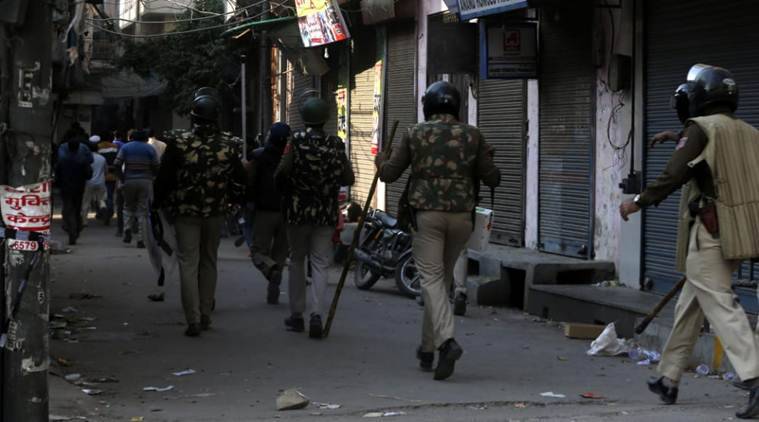
An association of 15 crop science companies on Thursday objected to the central government’s proposal to ban 27 commonly used chemicals.

CropLife said in a press release that these chemicals were duly registered in India after scientific evaluation. “They continue to be used for mitigation/control of pests and diseases in a wide range of crops in India and in several other countries. Farmer woes will increase during the approaching kharif season, especially with locust attacks looming over the border areas of Punjab and Rajasthan,” the company said in a press release.

Asitava Sen, CEO, CropLife India, said, “The order has certain factual errors, inconsistencies and incomplete claims, as per the data submitted by our member companies and other original registrants for some of these molecules…the process of review should be science-based and consultative. We also urge that the draft order should not be erroneously misinterpreted or misused by state and district level administrators to disrupt the supplies of these products till the issuance of the final order, at a time when the supply chain is already struggling with extraneous factors such as Covid-19.”

According to a third party study, the proposed molecules together constitute at least 18-20 per cent of the Indian market. The coronavirus pandemic has caused big disruptions in the agricultural supply chain. Coupled with labour shortage and in the absence of properly planned alternatives, crop yield, food security and farmers’ livelihood in the country will be adversely impacted with this ban, experts said.

📣 The Indian Express is now on Telegram. Click here to join our channel (@indianexpress) and stay updated with the latest headlines

For all the latest India News, download Indian Express App.

© The Indian Express (P) Ltd


Source link

Over 3,000 students staying in Navodaya Vidyalayas during lockdown sent home: HRD Minister - education


Over 3,000 students, who were staying in 173 Jawahar Navodaya Vidyalayas across the country due to the COVID-19-induced lockdown, have been safely sent back home, Union HRD Minister Ramesh Pokhriyal ‘Nishank’ said on Thursday.

Jawahar Navodaya Vidyalayas (JNVs) are co-educational residential schools run by the Navodaya Vidyalaya Samiti, an autonomous body under the human resource development (HRD) ministry. “The Navodaya Vidyalaya Samiti has successfully completed the exercise of shifting of over 3,000 students who were staying in 173 Jawahar Navodaya Vidyalayas in various parts of the country during the lockdown period,” Nishank said.

In the backdrop of COVID-19 situation, the Navodaya Vidyalaya Samiti (NVS) had preponed its summer vacation schedule and the JNVs were closed from March 21.

“While majority of the students of the JNVs could travel to their respective residences, which are mostly within the district boundaries, before the imposition of the nationwide lockdown, 3,169 outstation students who were staying in 173 JNVs, under the migration scheme and 12 students who were attending preparatory classes at Centre of Excellence, Pune, for the JEE (Mains) exam could not travel to their residences,” Nishank said.

“With further extension of the lockdown period, these outstation students (including girls) and mostly in the age group of 13 – 15 years, were increasingly becoming restless and homesick as they had not met their families for the past over six months,” he said.

Universities and schools across the country have been closed since March 16 when the Centre announced a countrywide classroom shutdown as one of the measures to contain the COVID-19 outbreak.

Later, a 21-day nationwide lockdown was announced on March 24, which came into effect the next day. It has now been extended till May 31.

The death toll due to COVID-19 rose to 3,435 and the number of cases to 1,12,359 in the country on Thursday, registering an increase of 132 deaths and 5,609 cases in the last 24 hours, according to the Union Health Ministry.

The number of active COVID-19 cases stood at 63,624, while 45,299 people have recovered and one patient has migrated, it said.


Source link

Delhi violence: Police slap UAPA against Jamia student Asif Iqbal Tanha


By: PTI | New Delhi |

Published: May 21, 2020 9:56:04 pm


delhi news, delhi police, delhi violence, Delhi police, union home ministry, northeast delhi riots, indian express Tanha is a third-year student of BA in Persian language.

The Special Cell of Delhi Police has booked Jamia Millia Islamia student Asif Iqbal Tanha under the stringent Unlawful Activities (Prevention) Act for allegedly being part of a larger conspiracy behind the February riots in northeast Delhi, officials said on Thursday.

This comes days after the Delhi Police’s crime branch arrested the 24-year-old in connection with the violence in the Jamia area during a protest against the Citizenship Amendment Act in December last year, they said.

The police said Tanha, a resident of Abul Fazal Enclave in Shaheen Bagh, is a member of the Students Islamic Organization and was part of the Jamia Coordination Committee which spearheaded protests against the Citizenship Amendment Act.
He was arrested on production warrant by the Special Cell of the Delhi Police on Tuesday and booked under the UAPA for being part of a larger conspiracy of the riots in Delhi, said a senior police official, who did not wish to be identified.

“We had evidence and wanted him in a case that we were investigating. So we arrested him on production warrant on Tuesday and have been granted seven days of custody,” he said.

A court on Wednesday had sent Tanha to seven days of police custody in the case related to communal violence in February in northeast Delhi during the protests against the Citizenship Amendment Act, after the police said his remand was required to unearth the entire conspiracy and to confront him with the electronic data collected during investigation.

Jamia Coordination Committee members Safoora Zargar, Meeran Haider, President of Jamia Alumni Association Shifa-Ur-Rehman, suspended AAP Councillor Tahir Hussain have also been booked under the anti-terror law in the case.

The Crime Branch of the Delhi Police had arrested Tanha recently in a case registered at Jamia police station on December 16, 2019 in connection with riots in the Jamia area in which he was named as an accused,” a senior police officer had earlier said.

Tanha is a third-year student of BA in Persian language. He is a key member of the Jamia Coordination Committee and played an active role in organising protests and riots in Jamia in December 2019, police had said.

He is a close associate of Umar Khalid, Sharjeel Imam, Meeran Haider and Safoora Zargar who had been key organisers of anti-CAA protests and subsequent riots, the police said.

On December 15 last year, protesters had torched four public buses and two police vehicles as they clashed with police in New Friends’ Colony near Jamia Millia Islamia during a demonstration against the amended Citizenship Act, leaving at least 40 people including students, policemen and fire fighters injured, officials had then said.

Communal clashes had broken out in northeast Delhi on February 24 after violence between citizenship law supporters and protesters spiralled out of control, leaving at least 53 people dead and around 200 injured.

📣 The Indian Express is now on Telegram. Click here to join our channel (@indianexpress) and stay updated with the latest headlines

For all the latest Delhi News, download Indian Express App.

© The Indian Express (P) Ltd


Source link

Bihar Polytechnic Lecturer Recruitment Online Form 2020 How to apply Online Form for Teaching Jobs

Name Of The Sarkari Job : Bihar Polytechnic Lecturer Recruitment Online Form 2020 Sarkari Latest Job  Informtion: Bihar Public Service ...