Friday, 22 May 2020

Gloved umpires to not hold sweaters, sunglasses, states ICC guidelines


By: Express News Service |

Updated: May 23, 2020 1:06:15 am


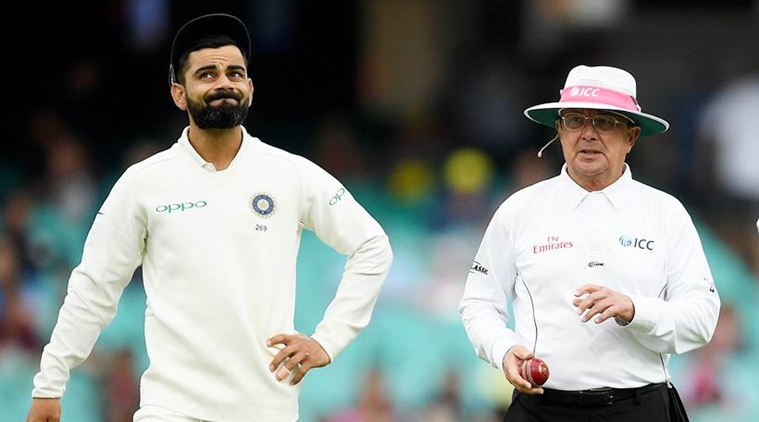
Players should now manage sun-glasses, sweaters and caps on their own. (Source: Reuters)

The International Cricket Council (ICC) perceives the cricket ball as the biggest risk factor in its endeavours to resume the game. So days after prohibiting the application of saliva on leather, a usual practice to ‘keep’ the ball, the ICC, in its guidelines to a safe resumption of the game, sheds a lot of thought on the “management of the ball.”

BALL MANAGING

To start with, they emphasise on not sharing the equipment, which is feasible with all other equipment of the sport but the cricket ball. It passes hands between overs, at intervals, and at the close of play. The guidelines vaguely specify role-specific measures to minimise the risk the cricket ball entails.

For instance, the umpire can wear protective gloves, the bowlers should refrain from touching eyes, nose, and mouth after making contact with the ball. They can’t obviously use saliva (though sweat is permissible), and should regularly rinse their hands with sanitisers after touching the ball, which probably he/she could between overs. Moreover, they should now manage sun-glasses, sweaters and caps on their own.

It’s trickier for fielders to keep their hands regularly sanitised with alcohol-based hand-rub as the ICC prescribes, especially in the limited over games, where fielders are much more in action than the longest format. Taking breaks between overs is time-consuming. Maybe, they could keep a sachet or bottle in their pocket.

READ | No to saliva, yes to sweat: ICC and its match-ball rules

GENERAL CAUTION

General hygiene practices also apply, like “coughing or sneezing into your bent elbow, no sharing of water bottles and towels, and no shared use of equipment, unless it’s an indispensable part of the protocol. Also, players, as much as possible, should be encouraged to adopt a ‘ready to train’ approach where possible, which implies coming to training prepared without the need to use any communal facilities such as changing rooms or showering facilities. Also, the venue should have additional changing room facilities to allow for social distancing. There should also be no bed linen in treatment rooms.

BIO-SAFETY OFFICIAL

If sports bodies across the world are building bio-secure stadiums, the ICC insists on appointing a medical advisor or biosafety official, whose task is to keep a tab on the bio-security of a venue as well as players. He will also be responsible for implementing government regulations, as well as assisting “with planning for a safe return to training and competition.”

PRE-MATCH CHECKS

Teams are advised pre-match 14-day isolation camps, where their health, risk factors and temperature will be continuously monitored. In this regard, an appropriate testing plan during training and competition will be chalked out to guarantee that the team members and support staff are uninfected. Depending on cost, speed, accuracy, and availability, frequent COVID-19 tests too could be conducted on the players. Hosts should facilitate speedy consultations and tests to minimise waiting time. In short, there could be an increased presence of medical staff in the stadium as well as when a team travels.

BIO-SECURE BUBBLE

As much as they could, the players should travel in sanitised vehicles, hopping from one safety-bubble to the other. If they are travelling abroad, they should consider using chartered flights and regulate seat spacing inside the flights. Besides, they should undergo mandatory quarantine after landing in a new country as well after returning home. If the stadium doesn’t have inbuilt hotel/lodging facilities, they should be a dedicated hotel floor and staff. Rooms shouldn’t be shared either. Moreover, adequate arrangements should be in place if a team member tests positive.

READ | ‘No loo breaks during training, no handing over cap to umpire’

BACKGROUND CHECK

Before allotting a venue or a training facility, an assessment should be made on the extent of the virus spread in the particular community and whether the community has the facilities to deal with it.

📣 The Indian Express is now on Telegram. Click here to join our channel (@indianexpress) and stay updated with the latest headlines

For all the latest Sports News, download Indian Express App.

© The Indian Express (P) Ltd


Source link

Bihar Board 10th result 2020 not to be announced today - education


Bihar Board 10th result has again been delayed. BSEB chairman Anand Kishor has told Live Hindustan that the post- evaluation work of board result is still left and it might take four to five days to complete it. It is expected that the result will be declared anytime after Monday. Lakhs of students were anxiously waiting for their results on Friday . They will have to wait for few more days to get the Bihar Board 10th result 2020.

BSEB has already completed the toppers’ verification process and the board is busy in some post-evaluation work. Once the pending work is completed, the Bihar board students will get their results online at biharboard.online or biharboard.ac.in.

Many students took to Twitter to request the board officials to announce their results as early as possible.

Earlier it was expected that the result will be declared on Friday by 6 pm. However, the board officials did not give any update regarding this and could not be contacted after several attempts.

After the Bihar Board 10th result is declared, students can check their results by keying in their roll code, roll number and registration number on the official websites as mentioned above.

Click here for full coverage


Source link

HC allows Punjab schools to collect 70% of total fee


Written by Express News Service | Chandigarh |

Published: May 22, 2020 10:33:31 pm


Class X PSEB students to be promoted without exam: Amarinder Singh The schools in the order passed on May 15 were also directed to not reduce the salary of the teachers, and reschedule the last date of deposit of admission fee to one month after the condition improves.

THE PUNJAB and Haryana High Court on Friday ordered that the schools in Punjab can charge 70 per cent of the total school fee from parents and also allowed the schools to seek admission fee in two installments.

“Keeping in view the present circumstances, interim direction is being given that the admission fee which is paid one time by the parents, shall be paid in two equal installments in six months and the 70 per cent of the total school fee will be charged from the parents of the students and 70 per cent salary will be paid to the teachers during the pendency of this writ petition,” the order passed by Justice Ritu Bahri reads.

Independent Schools Association, Chandigarh and managements of different schools situated in Mohali had challenged the Punjab School Education Board order asking the schools, which are holding online classes, to only charge tuition fee and not building charges, transportation charges, charges for meals etc. The schools in the order passed on May 15 were also directed to not reduce the salary of the teachers, and reschedule the last date of deposit of admission fee to one month after the condition improves.

Advocate Aashish Chopra, appearing on behalf of the schools, argued that both the conditions are contradictory as on one side, the parents are to be given concession of not depositing the full fee but on the other hand, the schools are being ordered not to reduce the salary of teachers. It was also submitted that the private un-aided schools deposit funds under the head ‘Reserve Fund’ with the authorities – the amount at present stands at Rs 77 crore, but the government has not come to their help even for sanitisation. It was also contended that the admission fee of the students cannot be stalled as the fee is taken one time from the parents when the child gets admission in school.

The court in the order, while seeking a detailed reply, asked the state counsel to “get instructions as to how the respondents can help the private schools with regard to amount deposited in the ‘Reserved Fund’ for santising the school buildings”. The case has been adjourned for next hearing on June 12.

📣 The Indian Express is now on Telegram. Click here to join our channel (@indianexpress) and stay updated with the latest headlines

For all the latest Education News, download Indian Express App.

© The Indian Express (P) Ltd


Source link

Telangana Class 10 exams to be held from June 8 - education


With the Telangana High Court showing green light for conducting Class X exams after the first week of June, the state education authorities on Friday announced the exam schedule.

As per the new schedule, the exams will be held from June 8 to July 5.

Education Minister P. Sabita Indra Reddy announced that there will be a two- day gap after each paper as suggested by the high court.

The exams will be held from 9.30 a.m. to 12.15 pm.

Acting on the court’s suggestion to ensure social distancing, the department said 2,005 exam centres would be set up. This will be in addition to 2,530 centres set up earlier.

The minister said every exam centre will be sanitised and the students will be provided face masks. All candidates will be thermally screened before their entry into the exam centres.

For candidates found to be suffering from fever, cold and cough, separate rooms would be providing for writing the exams.

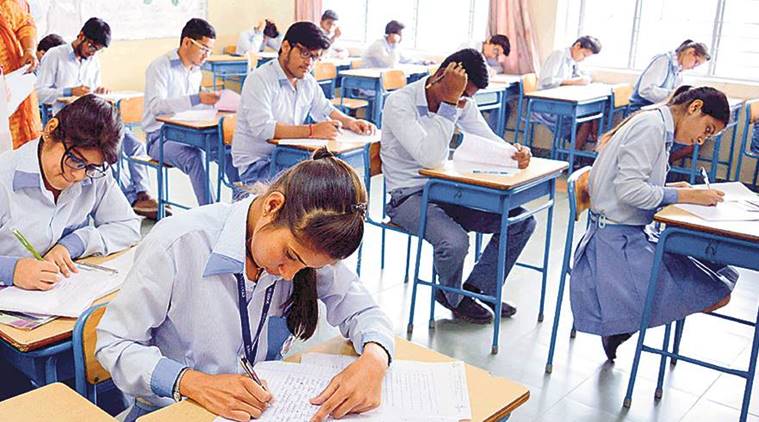
One student will sit on each bench in the exam hall. Students will be informed about their exam centres through their respective schools.

The Telangana State Road Transport Corporation (TSRTC) will operate special buses to ferry the students to their exam centres.

Sabita Indra Reddy said services of additional 26,422 teachers will be used as invigilators at the exam centres. It will be compulsory for them to wear masks and gloves.

She appealed to parents of the students to take care of them to ensure that they are not affected by Covid-19. On the suggestion of the High Court, the department decided to open a helpline for students and their parents.

While allowing the government to go ahead with the preparations for the exams after first week of June, the High Court on Wednesday asked it to review the situation on June 3 and submit its report to the court the next day. The government was asked not to conduct the exams if the Covid-19 situation deteriorates by then.

A division bench passed the orders on a petition filed by the state government, seeking review of the interim orders passed by the court in March and the permission to conduct the exams in May as per the revised schedule.

On March 20, the High Court had directed the state to postpone the Class X exams, scheduled for March 23 to April 6, in view of the Covid-19 outbreak.

The state had conducted the exams for three papers of the first and second languages before March 22 as per the original timetable.

The state Cabinet earlier this month decided to conduct the exams for remaining papers during May.

It moved the High Court, seeking permission for the same keeping in view the academic calendar and the interests of 5.50 lakh students.


Source link

India reaches out to Pak, Iran for coordinated response to contain desert locusts


Written by Shubhajit Roy
| New Delhi |

Published: May 22, 2020 10:36:22 pm


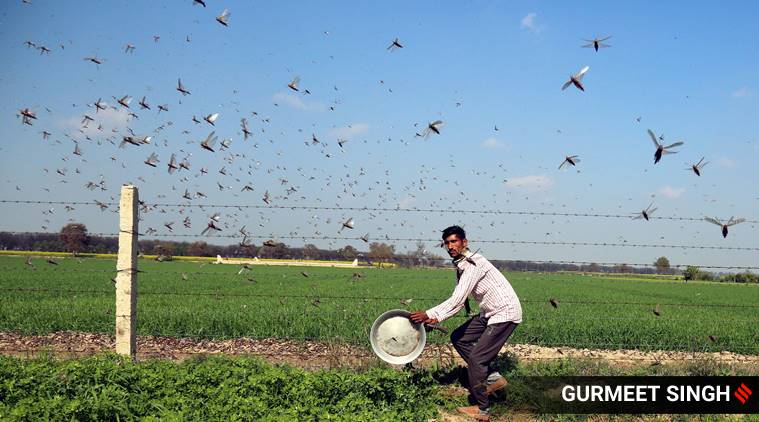
Man beats “thalli” to make swarm of locust (Tiddi Dal) fly away from his field at village 4V near Sri Karanpur in SrI Ganga Nagar in Rajasthan.
India has reached out to Pakistan and Iran as desert locust is spreading in the region and threatening crops in these countries and elsewhere.

Billions of insects forming swarms that spread over hundreds of thousands of acres have swept into Yemen, Iran, Pakistan, and India, threatening harvest.

To further regional cooperation, sources said, India has proposed “coordinated response” to desert locust control to Iran and Pakistan.

India has suggested to Pakistan that both countries coordinate locust control operation along the border and that India can facilitate supply of pesticide Malathion to Pakistan.

The institutionalised mechanism of Locust Warning Organization could be energised for such cooperation, sources said. India has also offered to supply pesticide to Iran to carry out desert locust control operations in its Sistan-Balochistan and South Khorasan provinces. These efforts will contribute to mitigate the effect of desert locust not only in these countries, but also for India.

A source said, “Iran has already responded positively to the Indian offer. It remains to be seen if Pakistan will rise above its narrow-minded approach, as was seen in the case of India’s regional initiative for dealing with Covid-19, and come forward with cooperation on coordinated desert locust control operation with India.”

As per the Food and Agriculture Organization of the United Nations (FAO) reports, in Iran, hopper bands of the locust are maturing along the southwestern coastal plains, and another generation of breeding is underway in the southeast where hatching is taking place on the coast and in the interior of Sistan-Baluchistan. In Pakistan, adult groups are migrating to the India border from breeding areas in Baluchistan where hopper groups are present as well as in Punjab and Khyber Pakhtunkhwa in Pakistan.

The FAO reports indicate that the desert locust population is expected to move from spring breeding of Balochistan to summer breeding along India-Pakistan border. In India, more adult groups and small swarms have arrived from Pakistan in the past weeks and moved east into Rajasthan, reaching Jodhpur.

India’s Agriculture and Farmers Welfare Ministry leads the efforts in locust control in the country. It also spearheads initiatives to foster regional cooperation.

With Pakistan, there is an existing institutionalised mechanism for such cooperation, including regular border meetings between locusts officers of the two countries.

Six border meetings between locust officers led by Plant Protection Advisers of India and Pakistan are held every year (June to November) either at Munabao (India side) and or at Khokhropar (Pakistan side) for exchanging information on locust situation of both the countries. Wireless communication between Jodhpur and Karachi is also maintained every year during this period (June to November) for exchange of locust information between the two countries.

In addition, regional cooperation on locust control is driven by FAO. India participates in the meetings/ sessions of the FAO’s Desert Locust Control Committee; participates and organizes the meetings/sessions of FAO’s Commission for Controlling Desert Locust in South West Asia; and participates in the Joint Survey Programmes with Pakistan and Iran organized by FAO.

“There is consensus that the Desert Locust could pose a grave challenge in 2020. The Ministry of Agriculture and Farmer Affairs has already started efforts in the matter. In March 2020, the Minister of State in the Ministry of Agriculture Kailash Choudhary himself participated in a South West Asian Region virtual meeting coordinated by FAO to discuss regional cooperation to combat desert locust problem,” the source said.

📣 The Indian Express is now on Telegram. Click here to join our channel (@indianexpress) and stay updated with the latest headlines

For all the latest India News, download Indian Express App.

© The Indian Express (P) Ltd


Source link

MAH MBA CET exam result to be declared tomorrow, says Uday Samant - education


Maharashtra Minister of Higher Education and Technical Education, Uday Samant on Friday tweeted that the result for MAH-MBA/MMS CET will be declared on May 23 at 11 am. 

MAH MBA CET computer-based examination was conducted on March 14 and 15, 2020, in which 110631 candidates appeared.

Students who have appeared in the examination can check their results online at cetcell.mahacet.org after it is declared.


Source link

From Monday, no frisking at airports, contactless security check


Written by Deeptiman Tiwary
| New Delhi |

Updated: May 22, 2020 8:11:47 pm


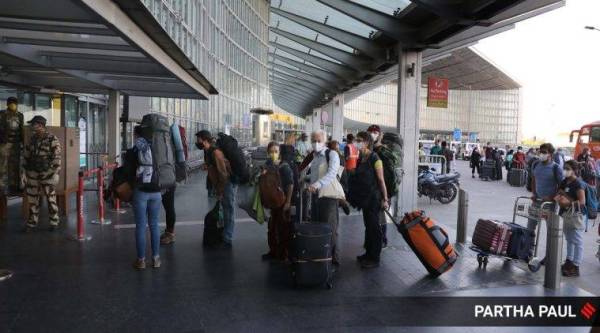
flights, flights resume india, domestic flights resume india, flights resume date, domestic flight start date in india, domestic resume india, flights resume india, flights start date in india, india flights domestic, flights start date india, international flights start in india, domestic flights resume india, international flights resume india, flights rules, flights rules and regulation, flights in india, india flight services, india air services, india airlines Even the length of the metal dector has been increased so that CISF personnel do not need to come close to passengers.

As flights begin operations this Monday, passengers will no longer be required to get their tickets physically verified or go through frisking.

The Central Industrial Security Force (CISF), which handles security at all major airports in the country, has worked out a system of contactless ticket verification and security check where adequate distance between passengers and security personnel would be maintained at all times.

READ | India domestic flights resume: How to book plane tickets online during lockdown 4.0

Now, there will be a glass partition at all airports between the CISF personnel and passengers at the gate. “The passengers will be required to show their tickets and IDs from across this barrier. At certain airports such as Hyderabad, technology is available for bar code reading or blowing up the ticket and ID on a screen through use of cameras. There even further distance can be maintained,” CISF DG Rajesh Ranjan told The Indian Express.

READ | Flight fares capped, middle seats not to be kept vacant: Aviation Minister announces guidelines

The other close contact routine followed by CISF personnel at airports is in the security hold area. “There also we will strive to ensure that in 99% of cases it is contactless and with minimal pat-down frisking. Even that will be done through handheld metal detectors. The general request is that passengers must divest all items from their body. If the door frame metal detector alarm goes off then, they will be asked to check themselves and divest items. If even after that there is a beep on HHMD or DFMD, then patdown will be resorted to. The personnel will have required protective gear such as face shield and gloves. There will be frequent sanitising of gloves and detectors,” Ranjan said.

Even the length of the metal dector has been increased so that CISF personnel do not need to come close to passengers.

READ | India domestic flights to resume: How your flight experience changes, what you pay

Based on the force’s recommendations, the Bureau of Civil Aviation Security (BCAS) has already done away with the stamping of boarding passes after security check.

“Here cameras will be relied upon for backend verification of all passengers having gone through security checks,” a CISF officer said.
The CISF, in fact, has been preparing for full-scale operations for over a month now and has made multiple suggestions to BCAS and Civil Aviation Ministry. Most of these suggestions have been included in the guidelines issued by the ministry for operation of domestic flights, sources said.

READ | Air fares capped for 3 months, web check-in, face mask, and Aarogya Setu approval must

“The operations at the airport had not come down to zero level anyway. As people were being evacuated from abroad or foreigners being facilitated on flights out of India, we were on the job. We used this time to prepare ourselves for full operations, so that we remain secure and ensure the safety of passengers also. Our endeavour will be to ensure that the passenger has a hassle free experience at the airport even as security is not compromised,” Ranjan said.

READ | Govt caps fares for airlines: Here is how much your flight tickets will cost

Apart from this, the CISF has passed orders for stocking of protective gear for three months in advance even as its suggestions on one metre distance marking in check in area, marking of square boxes for cars dropping passengers to the airport, reporting of passengers at airport two hours in advance, staggered flight schedules and sanitisation of all baggage are being implemented by airport and flight operators.

The force has till date reported around 98 cases of Covid 19 within its ranks including seven recoveries and one death. Most cases have been reported from Kolkata (40) and Delhi (32). It has among the lowest infections among paramilitary forces where numbers are now hovering at around 1000.

📣 The Indian Express is now on Telegram. Click here to join our channel (@indianexpress) and stay updated with the latest headlines

For all the latest India News, download Indian Express App.

© IE Online Media Services Pvt Ltd


Source link

Bihar Polytechnic Lecturer Recruitment Online Form 2020 How to apply Online Form for Teaching Jobs

Name Of The Sarkari Job : Bihar Polytechnic Lecturer Recruitment Online Form 2020 Sarkari Latest Job  Informtion: Bihar Public Service ...